

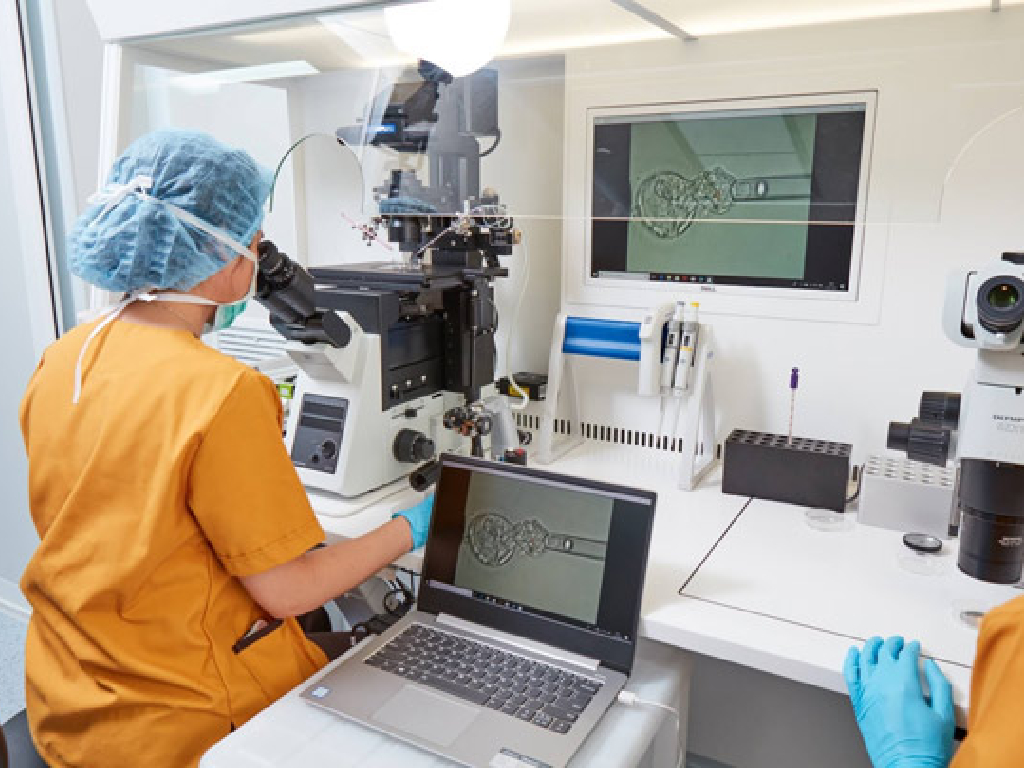
Genetic testing of embryos in in-vitro fertilization (IVF) treatments is a crucial step in increasing the chances of a healthy pregnancy and birth. These tests help detect potential genetic abnormalities in the embryo and select the healthiest embryos. However, it is important to understand the limitations of these tests and when they are necessary.
Basic Information About Human Genetics
The human body contains 23 pairs of chromosomes, which carry our genetic makeup.
• 22 pairs of autosomal chromosomes (not sex-related),
• One pair represents sex chromosomes (XX in women, XY in men).
Chromosomes contain approximately 30,000 genes. Changes in genes are called mutations. Some mutations are harmless, while others can lead to hereditary diseases.
Monosomy: The absence of one chromosome.
Trisomy: The presence of an extra chromosome (e.g., Down syndrome – Trisomy 21).
Modes of inheritance: Autosomal recessive, autosomal dominant, and X-linked inheritance.
To date, more than 6,000 genetic diseases have been identified.
In what situations are embryos genetically tested?
Genetic testing is not performed in every IVF treatment. However, genetic testing is recommended in the following situations:
• Consanguineous marriage and shared genetic carrier status,
• Previous history of pregnancy or child with genetic diseases,
• Known chromosomal abnormalities in women or men,
• Advanced age in women over 40,
• Recurrent miscarriages,
• Unsuccessful IVF attempts,
• When an HLA-matched sibling is planned for a child patient who needs a bone marrow transplant.
Types of Genetic Tests
• PGT-A (Preimplantation Genetic Test – Aneuploidy): It examines the chromosome number and structure of the embryo. It detects numerical abnormalities such as monosomy or trisomy.
• PGT-M (Monogenic Disease Test): It is used in the research of single-gene diseases (e.g., SMA, thalassemia, cystic fibrosis).
• PGT-SR (Structural Rearrangements): It is applied to couples with structural abnormalities in the chromosomes (translocation, inversion, etc.).
Success Rate in Embryos with Chromosome Screening
Bilimsel veriler, tek bir genetik olarak normal embriyo (öploid) transfer edildiğinde gebelik oranının ortalama %70 olduğunu göstermektedir.
• 3 transfer sonunda gebelik elde etme oranı %95,
• 5 transfer sonunda ise %98’e kadar çıkmaktadır.
Can all genetic diseases be screened for?
No. With current technologies, not all genetic diseases can be screened.
• WES (Whole Exome Sequencing): It examines gene regions (exons) that code for proteins. However, the sensitivity of this test is limited.
Therefore, if a known disease is present (e.g., SMA, thalassemia, cystic fibrosis), PGT-M provides much more reliable results.
Does a normal test result guarantee a healthy baby?
No. Genetic tests have a margin of error. Here are the reasons:
• Technical limitations of the test,
• Studying only specific genetic domains,
• Mosaic embryos: Some cells in the embryo may be normal, while others may be abnormal.
Are screening tests necessary during pregnancy with a tested embryo?
Yes. Even if the embryo has undergone genetic testing, routine screening tests should still be performed during pregnancy. Because embryo testing:
• It has a margin of error.,
• It can only show certain disorders,
• It does not cover all genetic diseases.
Therefore, methods such as double and triple screening tests, detailed ultrasound, and amniocentesis if necessary, continue to be used during pregnancy.
Conclusion
Genetic testing of embryos is an important technology that increases the success rate of in-vitro fertilization (IVF) treatment. However, it is important to know that these tests do not always eliminate all risks. Performing the correct test with the correct indication and ensuring that the expectant mother does not neglect standard screening tests throughout her pregnancy is the safest approach.