
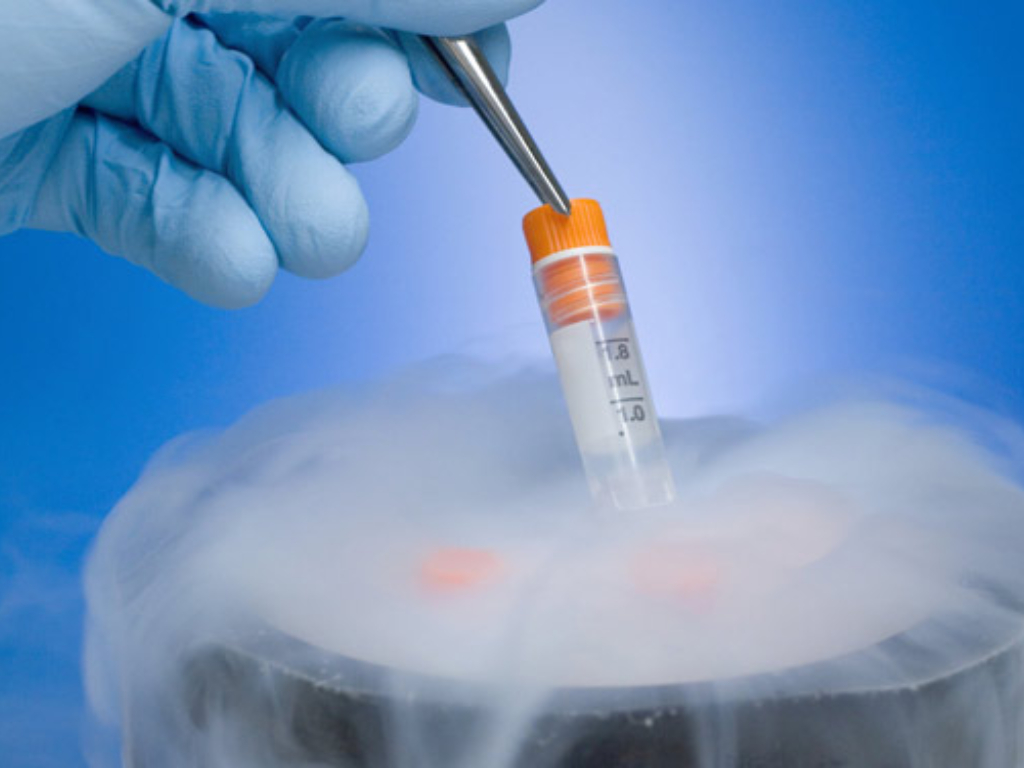
Embryo freezing, In in vitro fertilization (IVF), high-quality embryos obtained in a laboratory environment are stored using special methods for future use. This allows couples to continue treatment at a suitable time and avoids the need for a repeat egg retrieval procedure.
How is embryo freezing done?
Developing embryos are monitored in the laboratory.
Embryos deemed to be of suitable quality are selected.
Vitrification Using a rapid freezing technique called [name of technique], they are stored in special solutions at -196°C in liquid nitrogen tanks.
Once thawed, the embryos can continue their development from where they left off.
Advantages of Embryo Freezing
If the couple needs to undergo IVF treatment again in the future, there will be no need for a repeat egg retrieval procedure.
Even as a woman ages, the chance of pregnancy can be preserved by using embryos obtained at a younger age.
In patients at risk of OHSS, embryo freezing is used instead of fresh transfer to ensure patient safety.
It is one of the most effective methods for preserving fertility before cancer treatment (chemotherapy, radiotherapy).
How long can embryos be stored?
Legally, there are different regulations in each country.
In Türkiye embryos for a maximum of 5 years It can be kept secret. This period can be extended at the couple's request.
Scientifically, long-term storage of embryos does not reduce success rates after thawing.
Who is recommended for embryo freezing?
To couples who have a large number of high-quality embryos,
To women at risk of OHSS,
Couples who will undergo preimplantation genetic testing (PGT),
For women who wish to preserve their fertility due to advanced age,
To those who will undergo cancer treatment.
✨ Conclusion:
Embryo freezing is a safe method in IVF treatment that both increases success rates and saves couples time. Advanced vitrification technique Thanks to this, embryos can be stored healthy for years.